Genzi Street Font for Urban Craft Projects
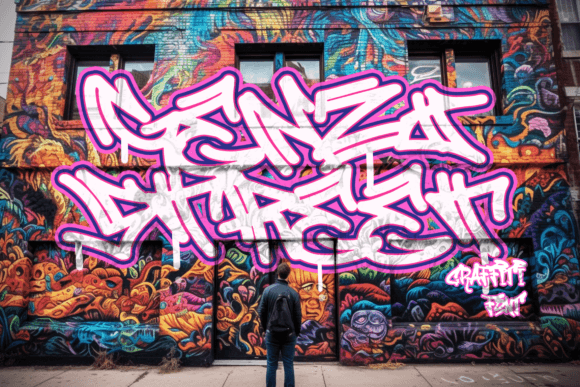
It started with a candle label — one I’d sketched by hand on scrap paper, then scanned and traced in Illustrator. But something felt off: too polished, too quiet. I needed that raw, sidewalk-chalk-meets-spray-paint energy — the kind that says “made here, not mass-produced.” That’s when I opened Genzi Street, a monoline graffiti font with natural street handwritten accents. Instantly, my “Midnight Smoke” soy candle label snapped into focus: bold, unfiltered, unmistakably human. This isn’t just another display font — it’s a tactile voice for makers who want their products to speak with grit and authenticity.
Genzi Street for Candle Labels and Hand-Poured Product Packaging
Genzi Street shines where personality meets practicality — especially on small-format labels like those for candles, bath salts, or small-batch soaps. Its clean monoline weight holds up beautifully at 10–14 pt on matte kraft stickers, and the subtle irregularities in stroke rhythm (think slight tapering, uneven baseline sway) mimic real marker-on-cardstock energy. I tested it on a 2" x 3" oval label for a lavender-vanilla candle: printed on white vinyl with black ink, the font stayed legible even under dim shop lighting. Because Genzi Street is a display font built for impact — not paragraphs — it works best for short names, scent titles, or minimalist descriptors (“Hand-Poured • Small Batch • Made in Portland”). For longer text, I pair it with a neutral sans serif like Montserrat Light — letting Genzi Street anchor the design while keeping ingredient lists or care instructions easy to scan.
Genzi Street for Greeting Cards and Seasonal Printable Wall Art
When designing holiday cards or printable wall art for a cozy urban apartment, Genzi Street adds instant warmth without leaning into cliché. Its street handwritten accents give phrases like “Joy Runs Deep” or “Found & Framed” a grounded, lived-in feel — like chalk lettering on a brick alley wall. As a fonts creator, I use Genzi Street for title layers in Canva and Affinity Designer, then export high-res PNGs with transparent backgrounds for digital downloads. It scales cleanly from 8" social media previews to 24" framed prints — no pixelation, no awkward joins. Just consistent, confident attitude. Bonus: its natural flow reads well even at smaller sizes (16–20 pt) on greeting card fronts, as long as you avoid tight kerning or all-caps stacking. Always test print a corner before batch-printing — some cutting machines (Cricut Explore Air 2, Silhouette Cameo 4) handle Genzi Street’s open counters smoothly, but very tight spacing may require manual path adjustment.
Genzi Street for Wedding Invitations and Elegant Branding
Yes — really. Genzi Street works for weddings, especially modern, industrial, or loft-style celebrations. Think concrete tables, exposed beams, vintage signage. Paired with a refined serif like Playfair Display or a delicate script like Quicksand, Genzi Street brings unexpected contrast and soul to save-the-dates, welcome signs, or menu boards. I recently designed a set of 5x7" invitation suites using Genzi Street for the couple’s names and “Saturday, October 12” — then switched to a soft serif for RSVP details. The result? Elevated, intentional, and deeply personal. As a display font, Genzi Street isn’t meant for full ceremony programs — but for headlines, monograms, or single-line vows (“We said yes on the rooftop”), it delivers emotional resonance that generic scripts can’t match.
Genzi Street for Tote Bags, Mugs, and Boutique Tags
Physical merchandise is where Genzi Street truly earns its keep. On cotton tote bags screen-printed with water-based ink, its monoline structure ensures crisp edges and minimal bleed. Same goes for ceramic mugs — whether heat-pressed or sublimated, Genzi Street holds clarity at 36–48 pt without thinning out or collapsing. For boutique hang tags, I use it at 10–12 pt in all-caps for brand names (“Haven Goods”, “Rust & Root”) — always checking the included OTF/TTF files for alternate glyphs or stylistic sets (some versions include dotted ‘i’s or extra-flared ‘t’s for visual interest). Since Genzi Street is a commercial fonts license, I confirm usage rights before uploading SVG files to Etsy or selling editable Canva templates — especially important if customers will layer text over photos or add custom names.
Genzi Street for Planner Pages and Digital Download Templates
In my weekly planner pages, Genzi Street lives in the headers: “Focus • Flow • Finish”, “Today’s Win”, “Notes From the Sidewalk”. Its urban edge keeps productivity playful, not sterile. As a display font, it’s ideal for section dividers, habit trackers, or quote boxes — anywhere you want visual pause and intention. When building Canva or Google Slides templates for sale, I embed Genzi Street as editable text (not outlines), so buyers can change colors and sizing without losing quality. Just remember: always include clear licensing notes in your listing — Genzi Street is licensed for commercial use, but end users must purchase their own copy if they plan to redistribute or resell designs containing the font.
Genzi Street for Sticker Sheets and Social Media Graphics
Sticker sheets are my litmus test for any new font — if it cuts cleanly, reads fast, and feels joyful, it’s keeper. Genzi Street passed instantly. Its open letterforms (like the wide ‘e’, relaxed ‘a’, and airy ‘o’) prevent inner cut lines from clogging on vinyl. I used it for a 4-pack of 2" die-cut stickers: “Slow Down”, “Made With Care”, “This Way →”, and “Hello, Stranger”. All readable at arm’s length. On Instagram posts or Pinterest pins, Genzi Street adds texture without noise — perfect for quote graphics, shop announcements, or behind-the-scenes reels showing ink mixing or label pressing. Pair it with a muted background photo (brick wall, worn wood, textured paper), and the font does the talking — no filters needed.